my blog
We have a house full of batteries: skinny little AAA up to solid heavy cubes to power old timey Mac portables. There are batteries I've never seen, like the field mice I suspect live under the house - at least I assume my cell phone has a battery in it. There are things that might be batteries - the car battery recharger sitting under the stairs: big rechargeable battery? Perhaps I should consider a rough and ready definition of a battery: a device that stores energy for the use of another object. Admittedly, that could include leaves. But, as an archaeologist I once knew used to say, it's good enough for government work.
Along with the batteries, some of them, come battery chargers - the bridge between the electricity running along its insulated paths through the walls and under the floorboards and the multiple forms of batteries themselves.
One of the things I did this week was clear off the coffee table where I found six batteries, AA. I put them aside. When my husband came in, I asked if these were (a) new (possible - we buy batteries in multi-packs and they escape the cellophane - all that energy) (b) rechargeable. (At this point in time, with multi-focal lenses in my glasses, reading print that small requires considerable spatial fiddling to get the right distance - easier to wait and ask my husband).
Michael looked at them, said they were dead.
"What should I do with them?"
He hesitated a moment. "They can be tossed."
"Right," I said. "I thought there was something about not throwing batteries away..."
"Yes," he said, "but these are very small and I don't know what else to do with them. I don't know of any place for safe disposal of this kind of battery."
"They're very small. They can't do much damage."
"Very small," he agreed, "not much damage."
"A little guilt is better than a big inconvenience," I said.
Which seems to say something about recycling in general: I am probably typical of most people. Encouraging us to take the right path requires either massive guilt tripping or minor inconvenience.
Canterbury has a recycling scheme that involves plant waste (it goes into a green topped bin and gets collected every two weeks) and paper, cardboard, tins and aluminum foil (these go into clear plastic sacks that are picked up along with the garden waste). There is a bottle bank in the parking lot of our local supermarket, along with a receptacle for clothing, another for shoes, still another for books. Thursdays, Necessary Furniture cruises our neighborhood. They pick up donated furniture on Thursdays which they give to the poor. There's Oxfam and the Salvation Army for everything else.
The Little Poor Children are a necessary part of any recycling scheme. Like a battery recharger, the Government has provided a bridge between the mass consumption of those who have and the thing-less existence of the have-nots. Perhaps the Government, like the rest of us, had a mother that reminded us that The Poor Little Children in India would appreciate fried squash, eat it up and be thankful. Like the rest of us, the Government must hate squash and they've developed an impressive conduit.
Metaphorically speaking of course - even the Government can't recycle actual fried squash. There are tough souls with compost heaps...foolish tough souls as far as I'm concerned. Slimy grease oozing squash in a compost heap encourages rats; field mice under the house, yes. Rats, anywhere, no.
However, generally speaking, the disposal of everything but refrigerators and small batteries is tidy and involves minor inconvenience. If one chooses one's supplier of major appliances carefully, one can get disposal of the item being replaced. Not fridges. (The freon...) The Council will pick them up, for £25, but this involves getting them to the curb. One of the things I've given up because of age is wrestling with fridges.
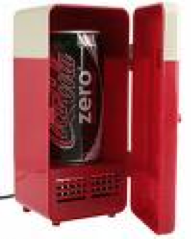
This is not an immediate problem. The fine new fridge sits next to the old one. The freezer section no longer works. It's turned off and I store pasta and dried fruit in it, both real treats for the little mice under the floor boards. The Fridge section still works and is cold enough for soft drinks and condiments. But one should think of the future: at some point, the fridge must go.
The Go-ingness of it will probably involve a pair of strong men with a trolley in addition to the Council. Unfortunately, the Council doesn't pick up at a specified time - Day, yes. "Put on the curb before 7 AM and we pick up before 6 PM" they say. Men with trollies come 9 to 5 and while they will specify a time, unlike the Council, they may not keep to it. I don't like leaving a large bulky object on a sidewalk for an indeterminate amount of time. I don't think children hide in dead fridges any more - my mother's worry over the same issue.
Nowadays, we have drunken students. Generally speaking, we have very nice students in our neighborhood. Mice-like, cute and charming, but there is the odd conversion to rat. Last year, during a beginning term party, students decided it would be great fun to walk from one end of the street to the other on parked cars, leaping from roof to hood. This was 2 AM and it's a noisy way of transporting oneself. The Police were called. So was the students' landlord - also at 2 AM. We didn't hear a squeak for the rest of the year.
But I think of a large fridge on a sidewalk, 2 AM, a crowd walking back from the pub: would students think it amusing to tip it over for the large bang? Or perhaps something similar would occur to young male non-students - it's not the educational status, it's the age that has such odd ideas of fun. One worries.
Let's look at the bright side: maybe Michael and I will be dead before the fridge has to be disposed of.
That only leaves little bitty batteries.

Friday, 19 June 2009
Batteries and Fridges
inventorspot.com